Last Updated: November 4, 2026
Quick Summary
The gritty historical thriller evolved by borrowing velocity from 1920s and 1930s pulp crime, moral fog and interiority from noir, research-driven accuracy from historical fiction, and moral weight from crime fiction. Each era pushed period detail further forward until the subgenre crystallized in the 1990s and 2000s with works like The Alienist.
- Pulp magazines of the 1920s and 1930s taught writers to open with danger and keep pace high.
- Noir added compromised protagonists and endings that refuse to resolve cleanly.
- The Name of the Rose (1980) proved a period setting could carry suspense without modern forensics.
- The Alienist (1994) signaled a distinct subgenre that refuses to soften the past.
- Anchor period detail to character action rather than exposition to protect pacing.
Table of Contents
- What Defines a Gritty Historical Thriller
- From Pulp Fiction and Noir to Psychological Suspense
- Historical Milestones That Shaped the Genre
- Thriller, Crime, and Mystery: How the Genres Cross Over
- Historical Thriller Writing Techniques That Build Tension
- The Best Gritty Frontier Historical Thrillers to Read
- Ethics, Violence, and Representation in Historical Settings
- Find Your Next Gritty Historical Thriller Series
- Frequently Asked Questions
What Defines a Gritty Historical Thriller
A gritty historical thriller is a novel that plants a high-stakes crime or conspiracy inside a meticulously researched past and refuses to soften what that world actually looked like. The grit comes from the setting: mud, blood, bad teeth, corrupt lawmen, and moral choices with no clean answer.
Most genre guides blur this space into general historical mystery. That’s a mistake. The gritty historical thriller has its own conventions, and they’re worth naming.
Gritty Realism Meets Suspense
The defining tension is between accuracy and momentum. A historical mystery can get away with a tidy parlor and a clever deduction; a gritty historical thriller cannot.
That’s the first thing most guides miss: in this subgenre, the historical detail isn’t decoration. It’s the engine of the anxiety.
From Pulp Fiction and Noir to Psychological Suspense
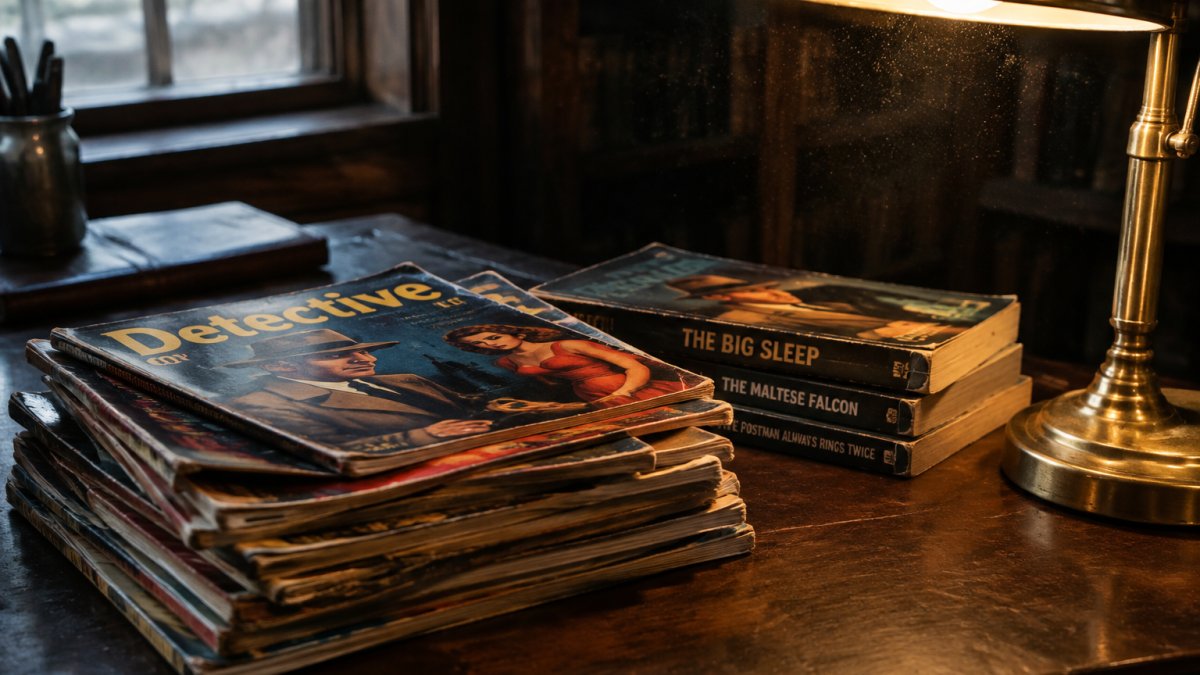
The genre’s DNA runs through pulp fiction and noir before it ever reaches the historical aisle. Pulp magazines of the 1920s and 1930s taught writers to open with danger and never let the pace drop.
The Pulp Era and Its Crime Fiction Roots
Pulp fiction was the training ground for fast-paced plotting. Writers working in the 1920s and 1930s learned to compress exposition, escalate conflict every few pages, and end chapters on a threat.
Noir’s Shadow and the Rise of Psychological Thrillers
Noir’s real contribution was interiority. Once crime fiction turned inward, the genre gained psychological suspense: the sense that the protagonist’s worst enemy might be their own judgment.
Historical Milestones That Shaped the Genre
The subgenre didn’t arrive all at once.
1920s-1930s: Pulp Crime Establishes Velocity
Pulp magazines such as Black Mask trained a generation of writers to open with danger and never let the pace drop.
1930s-1940s: Noir Adds Moral Fog
Noir fiction and its film adaptations introduced protagonists whose judgment is as dangerous as the criminals they pursue. James M.
Mid-Century: Historical Fiction Matures as a Research-Driven Form
After World War II, historical fiction raised reader expectations for accuracy.
1970s-1980s: Crime and History Converge
1990s-2000s: The Gritty Historical Thriller Crystallizes
Caleb Carr’s The Alienist (1994) placed a psychological crime investigation in 1896 New York, complete with period forensics, institutional resistance, and graphic violence.
Present: A Distinct Subgenre With Its Own Conventions
Today the gritty historical thriller is defined by unflinching realism, layered psychological conflict, and historically grounded stakes.
The subgenre accumulated in stages, each era borrowing from a neighbouring tradition and pushing period detail further forward.
Get the Ebook set at a 67% discount →
| Era | Milestone | Key example |
|---|---|---|
| 1920s-1930s | Pulp crime establishes velocity | Black Mask; Dashiell Hammett |
| 1930s-1940s | Noir adds moral fog | The Postman Always Rings Twice (1934) |
| Mid-century | Historical fiction matures as research-driven form | The Killer Angels (1974) |
| 1970s-1980s | Crime and history converge | The Name of the Rose (1980) |
| 1990s-2000s | Gritty historical thriller crystallizes | The Alienist (1994) |
| Present | Distinct subgenre with its own conventions | Unflinching realism and psychological conflict |
Thriller, Crime, and Mystery: How the Genres Cross Over
The three labels overlap, but they are not interchangeable, and knowing the difference helps you pick books that actually fit your taste. More importantly, the gritty historical thriller has its own conventions that separate it from each neighbor.
Mystery asks who did it. The pleasure is deduction, and the world is usually restored by the answer. A historical mystery can get away with a tidy parlor and a clever deduction because the puzzle is the point.
Crime fiction focuses on the act and its consequences, often from the criminal’s side. The whodunit structure may be absent entirely, and the moral weight sits on the deed rather than the detection.
Thriller runs on threat. The reader knows danger is coming, and the suspense comes from watching the protagonist try to stop it.
A gritty historical thriller typically fuses all three: a mystery-solving thread, a crime with real moral weight, and a threatening plot that keeps the pages turning. But the fusion is not random. The subgenre has distinctive conventions that distinguish it from adjacent genres:
- Morally ambiguous protagonists. Unlike the classic detective, the protagonist often compromises and sometimes fails. The reader is forced to sit with conflict rather than resolve it.
- Institutional corruption. The threat frequently comes from those in power, not only from a lone criminal. This mirrors noir’s suspicion of authority but grounds it in documented historical abuses.
- Physical danger from the setting itself. Mud, cold, infection, and distance are active threats, not backdrop. The absence of a modern safety net is the suspense mechanism.
- Historically grounded stakes. The plot turns on events or conditions that actually existed, so the suspense feels earned rather than invented.
These conventions are what separate the gritty historical thriller from a historical mystery with a body count. As documented in the Poetry Foundation’s overview of noir and crime writing traditions, noir’s influence on modern suspense remains one of the most durable currents in the field, and that influence is visible in the subgenre’s compromised protagonists and corrupt institutions.
Watch out: the most common failure is treating the crossover as permission to ignore genre expectations.
Historical Thriller Writing Techniques That Build Tension
Good historical thriller writing techniques solve a problem most writers underestimate: research slows pacing. The fix isn’t less accuracy, it’s better placement. Detail belongs in the character’s hands and senses, not in paragraphs of exposition.
Three techniques do most of the work:
- Anchor detail to action. A character notices the mud because they’re running through it, not because the narrator is describing the street.
- Let the era supply the threat. Disease, corrupt officials, unreliable communication, and brutal weather are period-authentic sources of danger that need no invention.
- Withhold the modern safety net. No phones, no forensics, no cavalry arriving on time. The absence of rescue is the suspense.
Balancing Historical Accuracy With Thriller Pacing
The balance comes down to selection. Accuracy doesn’t mean including everything you researched; it means including nothing that’s wrong. Choose the details that raise stakes and cut the ones that only prove you did the reading. Readers who want to know how much of this is real can dig into whether historical thrillers are based on facts, and writers who want a deeper craft walkthrough can follow our guide on writing an authentic historical thriller.
The Best Gritty Frontier Historical Thrillers to Read
The frontier is the subgenre’s natural home. Isolation, scarce law, and genuine physical danger make the American West a setting where gritty realism and suspense need no artificial help. The best gritty frontier historical thrillers share three traits: morally ambiguous characters, period detail that never feels like a costume, and plots that stay threatening to the final page.
If you’re building a reading list, start with books that treat the frontier as a place with consequences rather than a backdrop. Our own historical westerns lean into that: flawed protagonists, hard choices, and action that doesn’t flinch. For a curated starting point, browse the best gritty historical thrillers we recommend to readers who want the real thing.
Ethics, Violence, and Representation in Historical Settings
Violence in historical fiction raises a question every serious writer has to answer: whose suffering is the story using, and for what? Gritty realism can illuminate injustice or it can turn pain into spectacle. The difference is whether the violence serves the narrative’s moral argument or just decorates it.
Representation matters here too. Historical settings were diverse in ways popular fiction often erases, and a nuanced approach means writing the past as it was rather than as a simplified version of it. Our piece on thriller books with morally ambiguous characters explores how that plays out on the page.
Watch out: a common failure in this subgenre is using period prejudice as an excuse for gratuitous brutality.
Find Your Next Gritty Historical Thriller Series
Choosing a series is a bigger commitment than choosing a single novel, and the stakes are practical: you’re deciding where to spend your reading hours and your money. The safest approach is to match the series’ tone and scope to what you actually want, not to what the marketing promises.
Before you commit, ask three questions:
- Does the tone match your tolerance? Gritty realism and psychological warfare come with bleak stretches. Decide in advance whether that’s what you want.
- Is the series complete? A finished series removes the risk of a story that loses its plot halfway through.
- Does the value hold up? Bundled sets usually beat buying individual volumes one at a time.
At Jeffrey Poston Books, we built our catalog around those questions. Our complete sets come in ebook, audiobook, and paperback formats, and our historical westerns deliver the morally ambiguous characters and frontier detail this subgenre demands. If you want help deciding, our guide to choosing a thriller series walks through the trade-offs. For readers ready to commit, our ebook sets are available at a 67% discount, and the Convergence Trilogy gives you a multi-book saga with a landing worth sticking around for.
Frequently Asked Questions
What defines a gritty historical thriller?
A gritty historical thriller sets a suspense-driven plot in a real past era and refuses to soften it. Violence has consequences, moral lines blur, and historical detail (period clothing, tools, speech, and social rules) grounds the danger in something believable. The tension comes from a threatening plot moving through a world where the protagonist has no modern safety net: no phones, no quick authorities, no easy escape. That combination of accurate period setting and unflinching realism is what separates the subgenre from lighter historical mystery.
How has the historical thriller genre changed over the last century?
The genre’s DNA runs through 1920s and 1930s pulp fiction, then noir’s darker moral outlook in the 1940s, then the psychological suspense wave that pushed threat inward. Over time, authors moved from plot-driven whodunits toward layered protagonists whose inner conflict matters as much as the external danger. Historical thrillers absorbed those lessons and added rigorous period research. Today’s gritty historical thriller blends fast-paced plotting with nuanced character work and a willingness to show the harsh realities of the past rather than romanticize them.
How do authors balance historical accuracy with thriller pacing?
The practical answer is selective detail. Writers research deeply but only put on the page the historical detail that raises tension or reveals character: a faulty weapon, a brutal winter, a corrupt official with real power. Research dumps slow a narrative down, so strong historical thriller writing techniques favor short scenes, clear stakes, and conflict in every chapter. Accuracy shows up in consequences (what a wound, a storm, or a law actually did to people), while pacing comes from cutting anything that does not push the protagonist toward danger or a decision.
Why are readers drawn to gritty, realistic historical fiction?
Readers want stakes they can feel. A gritty frontier or wartime setting strips away modern conveniences, so every choice costs something and survival itself becomes suspense. The best gritty frontier historical thrillers also deliver morally ambiguous characters, which makes outcomes unpredictable and audience engagement stronger. Add an unexpected ending that grows out of the period’s real pressures rather than a trick, and the story feels earned. That blend of immersive past events, tension, and psychological depth keeps readers coming back for full series rather than single books.
The gap between a good historical thriller and a forgettable one usually comes down to nerve: the willingness to let the past be as harsh as it was. If that’s the kind of story you’re after, start with a series that’s already complete. Get started with Jeffrey Poston Books and read a gritty historical thriller built to hold its tension from the first page to the last.
