Table of Contents
- Why Writers Seek an Epistolary Alternative
- Found Footage Fiction: The Documentarian’s Approach
- Mixed Media Storytelling: Blending Text and Artifacts
- Oral Histories and Interview Transcripts
- Digital Communication: Texts, Emails, and Chat Logs
- Modern Epistolary Writing Tips for Every Format
- Which Epistolary Alternative Fits Your Story?
- Conclusion: Break Free from the Letter
- Frequently Asked Questions
Last Updated: September 7, 2026
The epistolary novel, built on letters and diary entries, has given us some of literature’s most intimate voices. But for writers seeking an epistolary alternative, the modern storytelling medium has expanded into texts, emails, interview transcripts, and even security footage. This guide from Jeffrey Poston Books explores seven contemporary formats that preserve the intimacy of the form while matching the pace of modern life.
Epistolary fiction is a narrative structure told through documents rather than continuous prose. The core appeal has always been verisimilitude: the reader feels like an archivist uncovering a story piece by piece. The challenge for modern writers is that the mailbox has been replaced by the inbox, and the diary by the group chat.
Why Writers Seek an Epistolary Alternative
Most writers turn away from the pure letter format for one practical reason: pacing. A traditional correspondence novel moves at the speed of mail delivery, which can feel glacial to contemporary readers raised on instant communication.
The other motivation is voice. Letters demand a certain formality, even in intimate relationships. Modern writers want the raw, unfiltered quality of how people actually communicate, which means capturing fragments, interruptions, and the chaos of digital conversation.
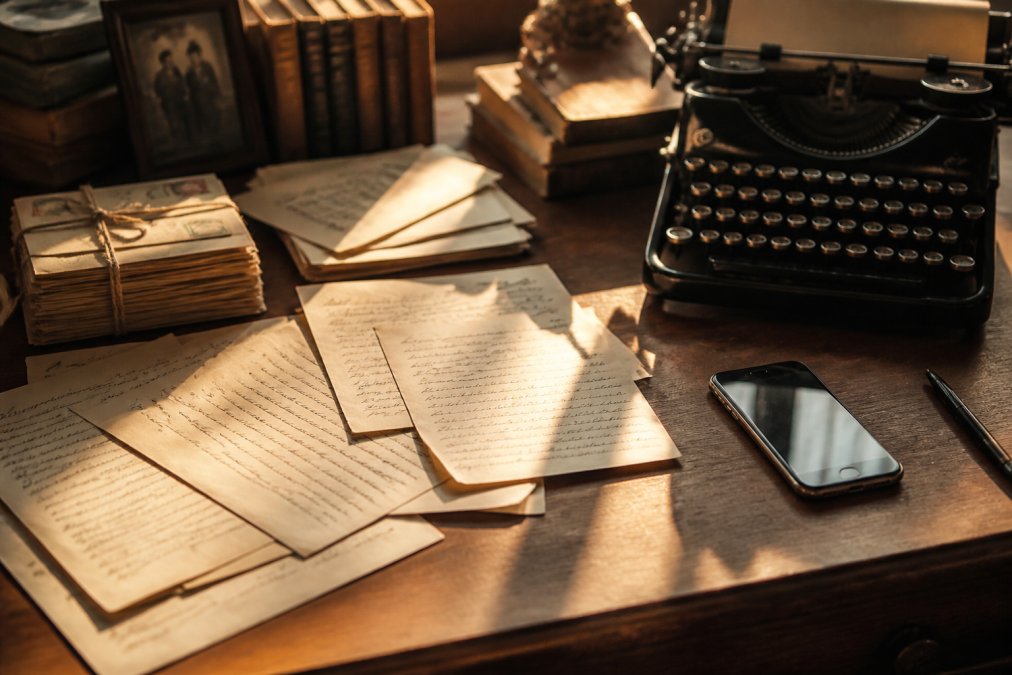
A third reason is structural fatigue. After several projects, the letter format can feel like a straightjacket. An epistolary alternative offers fresh constraints that force new creative decisions.
Found Footage Fiction: The Documentarian’s Approach
Found footage fiction treats the novel as recovered evidence. Instead of letters, the narrative emerges from transcripts, surveillance logs, and recovered recordings. This format excels at horror and thriller genres because the documentary style creates an unsettling sense of authenticity.
The technique borrows from cinema, where films like The Blair Witch Project built terror from supposedly real footage. In prose, this translates to mission logs, voicemail transcriptions, and even social media posts that gradually reveal a larger catastrophe.
This approach allows for a unique kind of unreliable narrator. When a character writes a letter, they are consciously composing. When they leave a frantic voicemail or type a half-coherent chat message, the guard drops.
The Missing Terminology: What to Call Your Format
One of the biggest hurdles writers face with this approach is simply naming it. The publishing industry and literary critics have developed specific terms for these sub-genres, and knowing them helps you position your work and find comparable titles. The most common terms include:
- Epistolary novel: The umbrella term for any fiction told through documents. While historically associated with letters, contemporary usage now includes any written artifact.
- Found footage novel: The closest prose equivalent to the cinematic technique. These novels present themselves as recovered evidence of a catastrophe, often with an editorial frame explaining how the documents were discovered.
- Documentary novel: A broader category that includes oral histories and interview-based narratives. The term gained traction in the 1960s with works like Truman Capote’s In Cold Blood, though that work is nonfiction (britannica.com). In fiction, the label signals a journalistic or investigative framing.
- Archival fiction: A term used by literary critics for novels that assemble meaning from fragments of institutional records, personal papers, and public documents. This is the most academic term and appears frequently in literary journals.
- Ergodic literature: Coined by critic Espen Aarseth in his 1997 book Cybertext: Perspectives on Ergodic Literature, this term describes works that require nontrivial effort from the reader to traverse the text. Found footage novels qualify because readers must actively reconstruct chronology and causality from disordered documents.
Understanding these distinctions matters for practical reasons. When you query agents or self-publish, you need the right keyword categories. A novel told through police evidence logs will not find its audience if you call it a “diary novel.”
Structural Templates for Found Footage
Beyond terminology, writers need structural guidance. The most common patterns in successful found footage novels include:
The Chronological Collapse. The narrative begins with orderly records that become increasingly fragmented as the crisis escalates. Early documents are dated, typed, and formal. Later entries are undated, handwritten, or partially destroyed. This visual decay mirrors the psychological breakdown of the narrator.
The Disordered Archive. The novel opens with a framing device, a preface from an editor or archivist, explaining that the documents were found in a specific order but have been rearranged for clarity. This allows the author to withhold key information while maintaining the fiction of authenticity.
The Incomplete Record. The author deliberately leaves gaps in the documentation. A character mentions an incident in one transcript, but the corresponding recording is missing or corrupted. These absences function as negative space, forcing readers to imagine what happened.
The Unreliability Gradient
Found footage fiction offers a spectrum of unreliable narration that traditional letters cannot match. Letters are deliberate compositions, the writer has time to revise, justify, and deceive. Found footage captures moments of crisis where characters lack that luxury.
A letter written after a traumatic event allows the narrator to construct a coherent story. A voicemail left during the event captures raw panic, incomplete sentences, and background noise. The latter feels more authentic because it is less composed.
This creates what narrative theorists call an “unreliability gradient.” Different document types carry different levels of narrative trust. A notarized legal document feels more reliable than a frantic text message. Skilled authors manipulate this gradient, placing crucial information in low-trust documents so readers must decide what to believe.
For writers, the practical takeaway is to vary your document types deliberately. If every piece of evidence carries the same emotional weight and narrative reliability, the format becomes monotonous. Mix formal records with casual messages, typed reports with handwritten notes, complete documents with damaged fragments.
When drafting a found footage novel, create a document inventory before you write. List every piece of evidence your reader will encounter, note its format, its date, and its reliability level. This prevents the common mistake of making every document equally articulate and trustworthy.
Mixed Media Storytelling: Blending Text and Artifacts
Mixed media storytelling combines written documents with physical artifacts to build a richer world. This epistolary alternative might include newspaper clippings, restaurant receipts, handwritten notes in margins, or even photographs described in precise detail.
Maria Semple’s Where’d You Go, Bernadette demonstrates this approach effectively, weaving emails, memos, and correspondence into a cohesive narrative (nytimes.com). The multimedia storytelling creates texture, building character through the contrast between formal business communication and desperate personal pleas.
The real advantage is immersion. When a story includes what looks like an actual flight itinerary or a scribbled grocery list, the boundary between fiction and reality blurs, deepening readers’ investment in the outcome.
Oral Histories and Interview Transcripts
The oral history format presents a story through recorded conversations, turning the narrative into a series of voices competing for the truth. Taylor Jenkins Reid’s Daisy Jones & The Six popularized this approach.
What makes this format powerful is its inherent unreliability. Every character remembers events differently, and the reader must weigh conflicting accounts. This creates a meta-fiction quality where the act of remembering becomes as important as the events themselves.
For writers, the format solves a perennial problem: exposition. Instead of narrating backstory, characters discuss it, argue about it, and distort it. Character development happens through contradiction.
Digital Communication: Texts, Emails, and Chat Logs
Digital communication is the most natural modern epistolary alternative. Text messages, emails, and chat logs capture the rhythm of contemporary relationships better than any letter ever could.
Beth O’Leary’s The Flatshare uses Post-it notes between roommates, while other novels have built entire stories from email threads and messaging apps (goodreads.com). The key advantage is pacing: digital exchanges happen in real time.
This format also creates unique narrative constraints. People text in fragments, misunderstand tone, and leave conversations mid-thought. Writers can exploit these gaps for dramatic tension.
Modern Epistolary Writing Tips for Every Format
Regardless of which format you choose, several modern epistolary writing tips apply universally. First, each document must sound distinct. If every email, transcript, or text reads like the same person wrote it, the format collapses.
Second, use the format to control information. Documents can be lost, withheld, or written by unreliable sources. Third, remember that what characters choose not to document is often as revealing as what they record.
A common mistake is making every document plot-relevant. Real correspondence is full of mundane details. Including a few irrelevant exchanges builds verisimilitude and makes the important documents stand out more sharply.
The Pacing Problem: Why Most Epistolary Drafts Fail
The single most common structural failure in epistolary fiction is pacing. Writers who transition from continuous prose to document-based narrative often discover that their story stalls. In traditional prose, the narrator can compress time and summarize events in a sentence. Documents cannot do this, each piece of correspondence represents a discrete moment in time.
Most practitioners find that the solution lies in what we call the “document density” approach. Map your plot beats against a timeline and assign each beat to a specific document. The ratio matters less than the consistency, readers will notice if the first half of your novel has a document every other day and the second half jumps weeks between entries without narrative justification.
A common pattern in successful epistolary novels is to increase document density as the climax approaches. Early chapters feature sparse correspondence with gaps between entries. As tension builds, the documents become more frequent, shorter, and more fragmented, creating a visual acceleration that mirrors the narrative urgency.
The Voice Matrix: Building Distinct Document Personalities
A second structural challenge is voice differentiation. In epistolary fiction, every document type has its own conventions, and every character has their own relationship to those conventions. A teenager texting their best friend sounds different from the same teenager emailing a professor.
To manage this complexity, create a voice matrix before drafting. List each character and each document type they will produce. For each combination, note formality level, typical sentence length, and emotional register. A character who writes formal emails at work but texts in lowercase fragments to their partner gives you two distinct voices from one person.
The Information Economy: What Each Document Can and Cannot Do
Every document format has inherent limitations that you should exploit rather than fight. Letters and emails allow for reflection, revision, and self-deception. Text messages and chat logs capture immediacy but lack depth. Interview transcripts create a power dynamic between interviewer and subject.
These limitations are not obstacles; they are your structural tools. If a character needs to reveal a painful truth, consider which format would make that revelation most difficult. A character who cannot say “I love you” in person might type it in a text message, then immediately send a follow-up that walks it back.
The Revision Protocol for Document-Based Fiction
Because epistolary fiction relies on fragmented presentation, revision requires a different approach than continuous prose. After your first draft, read the documents in chronological order rather than in the order they appear in the manuscript. This reveals plot holes and inconsistencies that the fragmented presentation might hide.
A summary of effective approaches:
| Format | Best For | Key Challenge | Pacing |
|---|---|---|---|
| Found Footage | Horror, Thriller | Maintaining authenticity | Fast |
| Mixed Media | Literary Fiction | Balancing artifact types | Variable |
| Oral History | Character Studies | Managing multiple voices | Medium |
| Digital Communication | Contemporary Drama | Avoiding monotony | Fast |
The most successful epistolary novels treat their format as a constraint system, not a stylistic flourish. Before you write, define your document inventory, your voice matrix, and your pacing curve. These three structural decisions will determine whether your novel feels like a cohesive narrative or a random collection of messages.
Which Epistolary Alternative Fits Your Story?
Choosing the right format depends on your story’s needs. If you want relentless momentum, digital communication offers instant exchanges that drive conflict forward. If you are building a mystery, found footage lets you scatter clues across recovered documents.
For character-driven literary work, oral histories provide the richest terrain for exploring memory and self-deception. Mixed media works best when the setting itself is a character.
Do not switch formats midway through drafting. Each structure creates specific narrative constraints that shape your plot. Committing to one format early, even imperfectly, produces a stronger result than constantly pivoting between approaches.
Consider the emotional register of your story. High-stakes action often feels cramped in traditional letters but thrives in the fragmented urgency of texts and logs. A slower, more reflective romance may still benefit from the intimacy of handwritten correspondence.
Conclusion: Break Free from the Letter
The epistolary form is not dying; it is evolving. Every new communication technology offers writers a fresh way to tell stories through the documents people leave behind. Whether you choose interview transcripts, chat logs, or recovered footage, the core principle remains: let the format reveal character and drive plot through what is recorded.
At Jeffrey Poston Books, we understand the power of unconventional narrative structure. Our multiverse-spanning sagas and political thrillers push boundaries while keeping readers anchored in compelling characters. If you are looking for immersive storytelling that experiments with form without sacrificing momentum, explore our discounted complete series sets.
Frequently Asked Questions
What is the best way to start writing an epistolary alternative?
Begin by choosing a document type that matches your story’s needs. For a mystery, found footage fiction or a police file works well. For a romance, text messages or emails feel current. Once you pick a format, outline the key plot points and decide which documents will reveal them. The goal is to show the story through the gaps and connections between the pieces, so plan which information each document will expose or hide.
What is the difference between epistolary and found-footage style fiction?
Traditional epistolary fiction uses letters, diaries, and journals to tell a story. Found footage fiction takes this further by presenting the narrative as if it were discovered recordings or documents, often including transcripts, news reports, and video logs. The main difference is the sense of immediacy. Found footage feels like raw evidence presented directly to the reader, whereas epistolary novels often have a reflective quality since characters write about events after they happen.
Why would an author choose a mixed media storytelling approach?
Mixed media storytelling lets you build a richer world by combining different types of documents, such as emails, newspaper clippings, receipts, and chat logs. This approach creates a more textured and immersive reading experience. It also helps with pacing. Short, punchy text messages speed up a scene, while a longer diary entry can slow things down for reflection. This variety keeps readers engaged and mimics how we actually consume information in the modern world.
Are there disadvantages to using an epistolary alternative?
One major challenge is maintaining emotional distance. Since readers only see the story through documents, it can be harder to build deep connections with characters or show scenes that wouldn’t naturally be recorded. Another issue is pacing. Switching between many different formats can sometimes feel disjointed if not handled carefully. You also need to be disciplined about voice, ensuring each character’s documents sound distinct so readers can tell them apart without constant reminders.
The best stories find the structure that serves them, not the other way around. An epistolary alternative can breathe new life into your writing by forcing fresh creative decisions. Get the ebook set at a 67% discount and discover how Jeffrey Poston Books delivers high-stakes action across genres, from the Convergence Trilogy to gritty historical westerns.