Last Updated: October 23, 2026
Quick Summary
Survivalist western novels blend classic Western frontier adventure with intense survival themes, centering on characters facing harsh wilderness, extreme isolation, and life-or-death challenges across the American West. The genre emphasizes how protagonists endure brutal landscapes, scarce resources, and their own inner resilience, with the wilderness itself as the primary antagonist rather than human conflict.
- The Revenant by Michael Punke is the definitive modern survivalist western novel, based on the true story of frontiersman Hugh Glass in 1820s Montana.
- Lonesome Dove by Larry McMurtry is nearly 900 pages and weaves survival challenges throughout an epic cattle drive from Texas to Montana.
- True Grit by Charles Portis follows fourteen-year-old Mattie Ross tracking her father’s killer across 1870s Arkansas and Oklahoma.
- Authentic survival detail, moral complexity, character depth, and unflinching perspective distinguish the best survivalist western novels for adult readers.
Table of Contents
- What Are Survivalist Western Novels?
- Best Western Novels for Adults: Our Selection Criteria
- The Revenant by Michael Punke
- Lonesome Dove by Larry McMurtry
- True Grit by Charles Portis
- Survival Fiction Books for Adults: Lesser-Known Gems
- Western Novels About Wilderness Survival: Frontier Classics
- What Makes These Novels Stand Out for Adult Readers
- Frequently Asked Questions
What Are Survivalist Western Novels?
Survivalist western novels blend classic Western frontier adventure with intense survival themes, centering on characters facing harsh wilderness, extreme isolation, and life-or-death challenges across the American West.
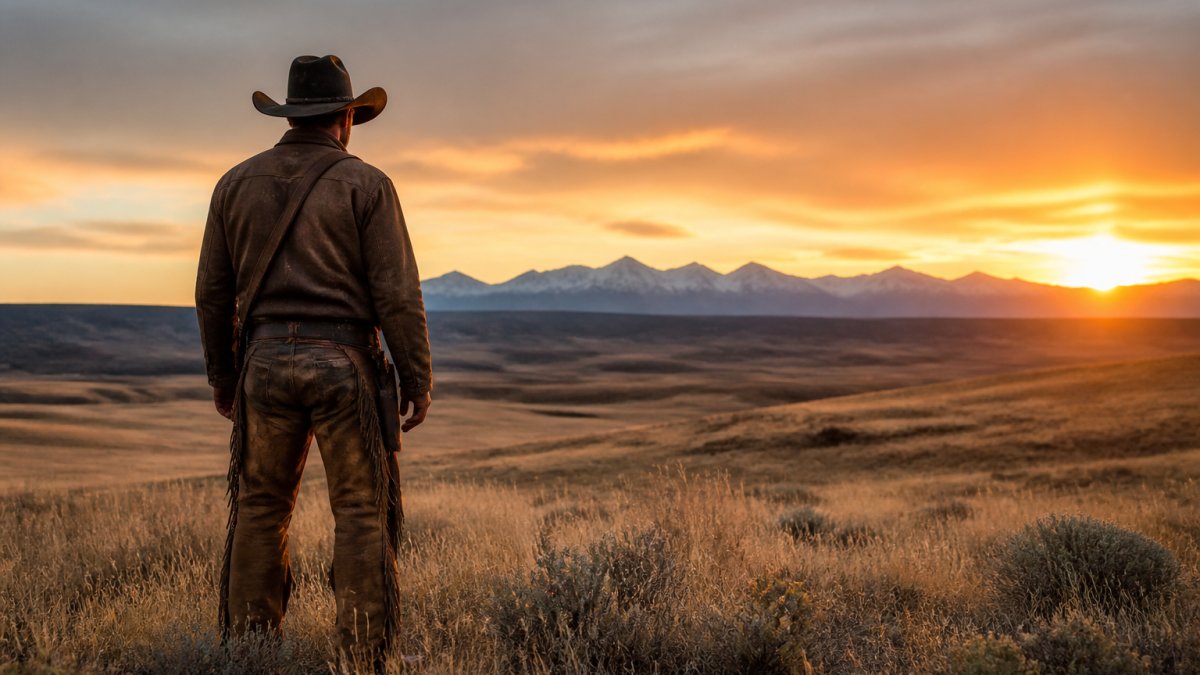
The genre demands authenticity: detailed survival tactics, realistic frontier hardship, and characters shaped by their environment, accounts of perseverance where resourcefulness and mental toughness determine whether a character lives or dies.
What makes survivalist western novels distinct is their focus on the individual against nature. Human conflict exists, but the real antagonist is the wilderness itself: desert heat, mountain cold, starvation, injury, and isolation.
Jeffrey Poston Books delivers high-stakes action and complex narratives through bestselling science fiction sagas, political thrillers, and historical westerns, perfect for readers seeking intense, immersive storytelling with compelling and diverse characters.
Best Western Novels for Adults: Our Selection Criteria
We evaluated each book on key dimensions to ensure it fits the survivalist Western category.
Our selection methodology:
- Survival authenticity: Does the novel treat wilderness survival as central to the plot, not incidental? Are survival challenges depicted with realistic detail?
- Adult themes and complexity: Does the narrative address morally ambiguous choices, psychological strain, and mature content appropriate for adult readers?
- Frontier setting: Is the American West, its landscape, history, and culture, integral to the story, not merely backdrop?
- Literary quality: Does the prose sustain reader engagement across the full length? Are characters developed with depth?
- Perseverance and resilience: Do protagonists demonstrate genuine resourcefulness and determination, not luck or convenience?
These criteria filtered out books leaning too heavily toward romance, comedy, or historical detail at the expense of survival narrative, and stories where the frontier setting feels decorative.
Each novel below has generated sustained reader engagement and critical respect among adults who value both literary craft and authentic survival storytelling.
The Revenant by Michael Punke
What separates The Revenant from typical adventure narratives is Punke’s refusal to soften the experience. Glass endures gangrenous wounds, starvation, freezing temperatures, and betrayal by his own company.
Punke grounded his narrative in historical research, period journals, geological surveys, and fur-trade records, so it reads like an account rather than invention. Authentic details about frontier medicine, animal behavior, and navigation by stars make the suffering credible.
The pacing is deliberate, this isn’t a quick thriller, but The Revenant rewards patience with genuine emotional weight. For adults seeking a survivalist western novel that refuses compromise, this is the essential starting point.
Lonesome Dove by Larry McMurtry
Larry McMurtry’s Lonesome Dove is an epic that transcends the Western genre while embedding survival as a fundamental theme, following retired Texas Rangers Woodrow Call and Augustus McCrae as they drive a cattle herd from Texas to Montana.
McMurtry’s characterization sets Lonesome Dove apart: these aren’t archetypes but fully realized people with contradictions, humor, and depth, so when characters die, and many do, their deaths carry weight.
The novel’s length (nearly 900 pages in most editions) lets McMurtry show how survival is as much about community and decision-making as individual toughness, rewarding for readers who want frontier life beyond simple action sequences.
For adults seeking a comprehensive survivalist western novel that balances epic scope with intimate character study, Lonesome Dove remains unsurpassed.
True Grit by Charles Portis
Portis’s prose is distinctive, spare, direct, and infused with period vernacular that never feels forced. Mattie’s narration carries authority; she’s intelligent, stubborn, and unafraid to challenge authority figures, and her determination drives the narrative with genuine tension.
The novel treats survival as both physical and moral.
True Grit is shorter than Lonesome Dove or The Revenant, but its economy of storytelling makes every scene count, a lean, propulsive narrative that sacrifices no depth.
The novel’s ending resists easy resolution: Mattie survives her journey, but survival exacts a cost that extends beyond the final page. For readers seeking survivalist western novels that acknowledge survival’s toll, this is essential reading.
Survival Fiction Books for Adults: Lesser-Known Gems
Beyond the canonical titles, several underrated survivalist western novels deserve serious attention, offering the same commitment to authentic survival detail while remaining less widely known than they merit.
The Searchers by Alan Le May
Alan Le May’s The Searchers centers on Amos Wayne, a frontiersman obsessed with recovering his niece after a Comanche raid. The novel unfolds across years of relentless pursuit through harsh terrain, tracking, and moral ambiguity.
What distinguishes The Searchers is Le May’s unflinching examination of frontier racism and violence.
Survival elements are woven throughout: characters navigate wilderness using period-accurate techniques and endure hunger, exposure, and the psychological strain of extended pursuit, details Le May treats with respect, never sensationalizing them but never minimizing their impact.
Get the Ebook set at a 67% discount →
The Searchers appeals to adult readers who want survivalist western fiction that grapples with uncomfortable truths about frontier life, a necessary book for understanding how survival and morality intersect.
Centennial by James A. Michener
James A. Michener’s Centennial is an expansive multigenerational saga spanning from prehistoric times through the 1970s, centered on a fictional Colorado town. Broader in scope than a typical survivalist western novel, it embeds authentic survival narratives throughout.
Michener’s strength lies in historical research and geological detail. He grounds his characters in specific landscapes, explaining how terrain shapes settlement patterns, survival strategies, and cultural development. Readers encounter Native American survival techniques, pioneer hardship, and the long-term consequences of frontier decisions.
The novel’s length and complexity reward patient reading. Michener builds understanding across generations, showing how survival challenges evolve as the frontier transforms. For adult readers seeking survivalist western fiction within broader historical context, Centennial offers unmatched scope.
Warlock by Oakley Hall
Oakley Hall’s Warlock presents a frontier town confronting violence and the question of how civilization emerges from chaos. The novel centers on a hired gunslinger brought to restore order, but Hall complicates the typical Western formula by exploring the costs of survival in a lawless environment.
Characters in Warlock face external threats (violence, harsh conditions) and internal ones (moral compromise, psychological strain). Hall treats survival as requiring difficult choices about when to compromise principles and when to hold firm.
The novel’s prose is controlled and precise. Hall doesn’t indulge in excessive description, but what he does describe carries weight. For adult readers seeking survivalist western fiction that explores how survival demands reshape human character, Warlock merits serious attention.
Western Novels About Wilderness Survival: Frontier Classics
Certain classic Western novels have endured because they authentically capture wilderness survival as central to frontier experience. These titles predate modern survivalist fiction but remain essential reading for understanding how the genre developed.
The Log of a Cowboy by Andy Adams
Andy Adams’s 1903 novel The Log of a Cowboy follows a cattle drive from Texas to Montana, narrated by a young drover named Tom Moore.
The Log of a Cowboy treats the cattle drive as a survival challenge. Readers encounter river crossings, stampedes, disease outbreaks, and the grinding physical and psychological demands of months on open range.
For adult readers seeking a foundational survivalist western novel rooted in firsthand frontier experience, The Log of a Cowboy remains invaluable. Its influence on later Western fiction is substantial, yet the novel itself holds up to modern reading.
The Buffalo Hunter
The Buffalo Hunter appears in curated Western reading lists specifically for its emphasis on survival and self-reliance. The narrative centers on a frontiersman pursuing buffalo across the Great Plains, a pursuit that demands intimate knowledge of landscape, animal behavior, and wilderness survival techniques.
The novel’s focus on hunting as survival, not sport, distinguishes it from lighter adventure fiction. The protagonist must understand the land intimately, anticipate animal behavior, manage resources carefully, and endure extended isolation. These survival elements aren’t incidental; they’re central to the narrative.
For readers seeking lesser-known survivalist western fiction that prioritizes authentic wilderness detail, The Buffalo Hunter offers rewarding material.
| Novel | Author | Primary Survival Focus | Best For | Publication Era |
|---|---|---|---|---|
| The Revenant | Michael Punke | Individual perseverance against wilderness | Readers wanting modern, uncompromising survival narrative | Contemporary (2002) |
| Lonesome Dove | Larry McMurtry | Community survival across extended journey | Readers seeking epic scope with character depth | Contemporary (1985) |
| True Grit | Charles Portis | Moral and physical resilience under hardship | Readers valuing literary economy and psychological complexity | Contemporary (1968) |
| The Searchers | Alan Le May | Survival intertwined with moral ambiguity | Readers confronting uncomfortable frontier realities | Mid-century (1954) |
| Centennial | James A. Michener | Multigenerational survival and settlement | Readers wanting historical breadth and geological detail | Contemporary (1974) |
| Warlock | Oakley Hall | Survival through moral compromise and choice | Readers exploring how survival reshapes character | Mid-century (1958) |
| The Log of a Cowboy | Andy Adams | Cattle-drive survival and frontier logistics | Readers seeking firsthand frontier authenticity | Classic (1903) |
| The Buffalo Hunter | [Author not specified in research] | Hunting and wilderness isolation | Readers prioritizing authentic survival technique | [Era not specified] |
What Makes These Novels Stand Out for Adult Readers
Survivalist western novels for adults demand more than simple action sequences or frontier nostalgia.
Authentic survival detail distinguishes these novels from lighter adventure fiction. Authors conducted research, consulted historical records, or drew from personal experience.
Moral complexity separates adult-oriented survivalist western fiction from younger readers’ adventure tales.
Character depth matters enormously. The novels on this list develop protagonists as fully realized people with contradictions, humor, and interior lives.
Unflinching perspective characterizes the best survivalist western novels. Authors don’t soften the experience, they show suffering, failure, and the grinding reality of frontier life.
These qualities combine to create survivalist western novels that reward sustained attention, books readers return to, recommend to friends, and remember years after finishing.
Survivalist western novels deliver the kind of immersive, complex storytelling that serious adult readers seek.
At Jeffrey Poston Books, we curate stories that demand reader investment and deliver genuine payoff. Our collection includes gritty frontier thrillers and historical Western fiction that share the same commitment to complex narratives and authentic detail. Explore our full Western novels category to discover additional titles that capture the intensity, adventure, and survival challenges that define the best frontier fiction. For readers seeking more gritty Western stories with similar themes, our 2026 picks for gritty Western historical thrillers offer additional recommendations that combine literary depth with page-turning intensity.
Frequently Asked Questions
What defines a survivalist western novel?
A survivalist western novel blends frontier settings with intense survival themes, focusing on characters who must overcome harsh wilderness conditions, isolation, and danger. These books emphasize resourcefulness, perseverance, and resilience against the unforgiving American West. Unlike conventional westerns that may center on lawmen or outlaws, survivalist western novels prioritize the protagonist’s struggle against nature, scarcity, and moral ambiguity in frontier life.
Are these survival fiction books for adults appropriate for casual readers?
Yes. While these survival fiction books for adults feature complex narratives and mature themes, they vary in pacing and commitment level. Standalone novels like True Grit work well for readers with limited time, while multi-book sagas require more investment. Most can be enjoyed at your own pace in ebook, audiobook, or paperback formats, allowing you to control how quickly you progress through the story.
Which western novels about wilderness survival have the most realistic frontier detail?
The Revenant by Michael Punke and Lonesome Dove by Larry McMurtry deliver the most authentic frontier settings and survival mechanics. Both novels immerse readers in genuine wilderness challenges, period-accurate equipment, and the physical and psychological toll of frontier life. The Log of a Cowboy by Andy Adams, written in 1903, also captures authentic frontier labor and survival through a historical perspective.
Do these western novels have morally ambiguous characters?
Yes. Many of these best survivalist western novels feature protagonists and supporting characters with complex moral codes. They often operate in gray areas where survival sometimes requires ethically questionable choices. This moral ambiguity adds depth and realism, reflecting how frontier life demanded pragmatism over strict principles, making these stories compelling for adult readers seeking psychological complexity alongside action.
